Pascal: [00:00:00] There's a moment in some psychedelic spaces where someone brings something painful into a room. Grief, anger, something political, and the room gently steers them back toward the light. " Focus on gratitude. Stay open. Don't feed it. You'll be fine. It's okay." I've watched this happen more than once, and I've started to wonder, what are we actually protecting when we do that?
In a world that frankly sometimes feels like a Black Mirror episode, I feel like collective healing is a topic we should talk about more, even if it's not always comfortable.
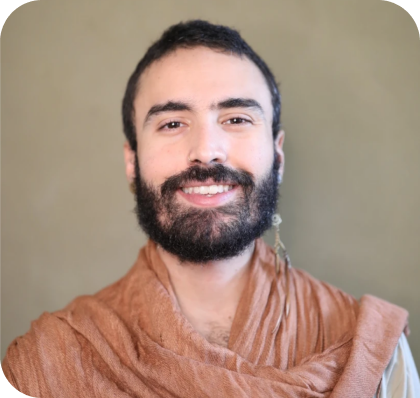
My guest today is Daniel Miceli. Daniel has spent the last 13 years moving between personal healing and systemic work, from a year living in the Amazon in his early 20s to years of facilitating ceremony and providing migrants and refugees with much-needed support. He's the kind of person who holds both things at once, his own healing and the question of what it means to heal inside systems that were never built to hold [00:01:00] everyone equally.
We talk about extraction, not just of plants, but of attention, land, and labor. We talk about why anger gets treated as a problem to manage rather than something sacred. And we talk about a moment years ago in a park in New York that changed the entire direction of his life This episode asks a little more of you than some of our other episodes do.
It moves through addiction, grief, violence, and some of the harder history underneath this work. If you feel comfortable, I invite you to lean into it. There's something at the other end of it worth reaching.
Without further ado, here's my chat with Daniel
Pascal: Hi, Daniel. Welcome to the show. So glad you're here and really honored to have you on the show.
Daniel Miceli: Thank you so much for having me here I'm really grateful
Pascal: yeah, so the first question is something that I've been meaning to ask you for a while now, which is better understanding how you got into this intersection of social activism, social justice, and, and healing work. What got you [00:02:00] into this, this feel and love to know more about that?
Daniel Miceli: so I am the child of migrants my father is from Argentina escaped the military dictatorship in 1976 and migrated to New York My mother is from the Dominican and she migrated with her family to New York as a child because of the conditions in the Dominican Republic and they both met in the US I grew up in Miami Both of my parents struggled with addiction my mother's side of the family my mother is Dominican which is a much more mixed side of the family acknowledge my position in that as being half Argentinian with European r roots And on my mom's side there's quite a lot of people that are more visibly people of color my brother was half African American and half Dominican brother was very much suffered from systemic harm and [00:03:00] systemic violence I watched very closely how my brother was treated very different from the system in regards to me and my sister Again on my mom's side I watched a lot of addiction or perhaps you know certain lots of religious dogma issues with drug abuse just watching how there was very visibly a lot more trauma within my mother's side of the family and especially the darker the complexion of the family members and watching this growing up and always having a passion something that also naturally was inside of me a passion for justice Having grown up in the United States the United States system which I find quite aggressive this individual kind of focus on the self and being a gear in the machine also growing up as a child that displayed a lot of feminine qualities how I received a lot of pushback from my environment a [00:04:00] lot of bullying a lot of aggression and growing up in a very unstable household and I'm Yeah and somehow through the way I went for my own individual healing and went to the Amazon jungle when I was 21 after struggling with depression suicidal ideation I was living in New York City I was hospitalized twice for acute alcohol intoxication taking a lot of drugs and was quite reckless in my behavior And then had quite a powerful psilocybin journey in Prospect Park actually in New York And in this mushroom journey it felt like it was the first time that I felt this connection to my soul and I was shown so clearly how my addiction and turning to alcohol and turning to drugs was my way of dissociating from the immense pain of all of the suffering And I sat with two friends in the park and was just crying and crying and crying And I remember a priest passed by us as we were sitting there and he said Oh sorry [00:05:00] excuse me We're like Sorry we'll get out of your way And this priest just looks at us and he's like Why are you apologizing for being alive is a beautiful gift and thank you so much He said something that was just so clear and it was this moment of wow that really felt like a message from life and from the medicine of there's beauty here And from there I mean I still had my issues I still continued with substance abuse but I knew in the background that there's something more And then I had quite a powerful psilocybin trip that said you know maybe it's time to leave and to go on a journey And that's when I made the decision to buy a one-way ticket to Peru When I was 21 years old went to the Amazon spent about a year living in the Amazon which that in and of itself was a very beautiful experience but also a very revealing experience to me being very young a bit naive going and thinking I'm only gonna seek healing And then also watching the way that the Western world was interacting with these local communities and the complexity of bringing in money [00:06:00] and business And I think I saw all kinds of shades of the ayahuasca world in that year that I spent in Iqitos and from there it just started transforming the passion for justice has always been present for me it's always been something that's been important to me I lived in Buenos Aires for five years I lived in Latin America for s for six years in total I think that also me a different exposure to privilege and systems of power And then it became especially powerful when I moved to Germany and I moved to Berlin and watching being in the center of the Western world and then watching how people interact with the substances within conscious communities or so called conscious communities I don't know how I feel about that word because who's more conscious than anybody else and then that's where it became even more clear to me I'm like there definitely is some work to be done when it comes to our relationship to these plants and ceremonies and how can we be in right relationship
Pascal: My mom was from Syria and she was displaced by the war [00:07:00] there to go to Egypt, and all of her family moved away from Egypt and then joined, Canada as a, at a very young age. And I was born in a family of privilege, but if you look at my mom's side, it's fractured by war and also displacement.
So, I relate also to your backdrop of, suicidal ideation or, like, depression and those things. And for me, like, my gateway from that to activism was my way to help serve the world and also to, really try to heal myself in those times. And it was only after, many years of doing that that I found medicine work.
And, I've always found that to be a beautiful transition from pure activism to psychedelic activism, and, learning a lot about the systems that, that we build our world around, especially from indigenous people in British Columbia that were speaking about these things many years ago.
And I'm curious to hear, because things have changed a little bit since about 10 years ago when I first took my first medicine journey, like, Shakuna at last year's PS 2025 named Decolonization as a central [00:08:00] team of the unfolding of the, the, the medicine space.
How did you bridge that background and do those experiences into actually serving in a space and what have you seen change in the psychedelic space since those days?
Daniel Miceli: What have I seen change in the psychedelic space for one 10 years ago I used to say that psychedelics were the answer I mentioned that I was very young I was naive I was exposed to this new world and seeing the beauty of the plants And I was like Yes everybody needs to take psychedelics I actually was writing for this woman named Amber Lyon She started Reset.me and I was writing all these articles and I was really like wanting people to come and experience the medicine And looking back 10 years later and watching how psychedelic use without the right framework without [00:09:00] reciprocity and without really an understanding of the spaceholders can be so I wanna say maybe I've just witnessed the danger of the use of psychedelics without proper integration and the use of psychedelics without awareness of privilege and power and that psychedelic spaces can actually reinforce these systems of privilege and power I mean you know I don't know I can't count how many of the facilitators all Western facilitators that I knew when I lived in the Amazon that were posting very extremist far right content or promoting you know Donald Trump or saying that he was the savior and watching very distorted information that's been spread through the internet where I'm like Whoa what happened how did this happen or to see so many of [00:10:00] these psychedelic spaces live in this eco chamber of love and light And unfortunately really only serving a particular subgroup of people that have the economic power to afford to go and have these experiences And then seeing how if there isn't the right framework of asking the right questions can be potentially very dangerous So I actually am at a moment where I don't know if I believe anymore that everybody needs to have a psychedelic experience or drink ayahuasca I'm more of a believer of we need to work with the tools that are available to us that are sustainable that are ethical working with the body and then and only when we are really prepared for the experience can we then go and have these rituals with the proper framework with the proper integration And I no longer [00:11:00] believe that it is for everyone I actually believe that it's gotten very much out of hand and that there needs to be the work of the decolonization process is very important in this field
Pascal:
what do you feel is the most important part of being systemically aware when doing this work? I think we both understand the importance of that and we live in a oppressive and violent system called capitalism and colonialism as well. How do you think about the relationship between the healing of the personal context relative to the social one and the systemic one?
Why do you think that's so important?
Daniel Miceli: I believe it's all one You And it's important you know when we go for our initial healing we're looking for the self I mean I'm going to work with my depression I'm going to work with my alcoholism I'm going to work with the trauma from my childhood the more that I've done the work for myself the more that I've learned for example with my mother who was incredibly unstable [00:12:00] and very violent she being the first child within a family that comes from one of the first islands to be colonized in the Caribbean with a very violent history of genocide of enslavement and watching how my mother's body took that in and then passed that on to us and that it was my responsibility to take that in and break that for all of the people that came before me So I think what happens is that a lot of the time when people approach plant medicine they're going to heal their own individual wounds and then they are met with either their ancestors or the systems that they live in the systems that we have been indoctrinated into I've had to do a lot of deprogramming through the medicine work that had me so focused on myself as an individual only to see myself as intrinsically connected to everybody [00:13:00] around me And it is of my fundamental belief that none of us are free on this planet until all of us are free And even if we cannot see the people that are being subjected to these violent systems which generally are bodies of the global majority I mean we think of us that live in the West if we live in the States or Germany or Europe wherever all of these resources that allow us to live with this privilege that allow us to fly all over the world that'll give us the passports of power that give us this access that so many people all over the world do not have it is our responsibility to acknowledge How did I get here and why do I have these rides And that pertains to the plant medicine space If you look at the biggest retreat centers you look all over the world where are the people coming from They are generally coming from countries have rosen and economic power because of [00:14:00] extraction and that is the reason why they are granted the access to go to these centers in the first place And a lot of these centers are catered to them which isn't necessarily wrong People in the West need healing people in the West also need to ask questions of how do I participate in systems that cause harm
Pascal: Mm-hmm. And that's where the doing your own work, paradigm comes in as well, the individualism of doing your work. And there's nothing wrong with that. We all kind of come in from a space of pain and things of that nature. And so we're not trying to, you know, say that that's not a good thing, but I wanna talk a little bit about, and I'm gonna read this because I wanna get their names right, but the work of Nessa Deveno, Brian Pace and James Davies, their argument is that psychedelics are being slotted into what they call the responsilizing logics of neoliberalism translation, the individual gets fixed, but the conditions producing the suffering don't.
And this, the sense that no other social arrangement is even [00:15:00] imaginable, so the only thing left to work on is yourself. Can you talk a little bit about that?
Daniel Miceli: Yeah so for me it's I think it's myself right I'm with myself with my body because my body is what holds the information in relationship to my family to my kin to my community to the world to the larger universe and how can I make the best out of this body so that I can be of greater service And I genuinely believe that each and every one of us has a role to play And I believe that if these questions are framed from the beginning of yes you're going in for you but let's take a moment and think who are the people that came before you What were their struggles And how do those struggles relate to where they are from What is the social and cultural context What comes before them And asking these questions so that people can have [00:16:00] a moment and think maybe this isn't just my problem Maybe my problem rooted in the systems that I live in right Maybe my issue is also cultural asking these questions and I believe bringing them into the medicine space can potentially be very powerful for us understanding our role for us understanding how we can orient our lives and be of greater service and so that this can ripple outwards perhaps to the people and the communities that might not have access to this medicine that when we start asking these questions of okay who is this medicine for Is this medicine only for those that can afford it is this medicine really for everyone And how can we create more just and equitable systems so that more people have access to work with these medicines especially the communities that need it the most right now
Pascal: And a lot of the talk that we hear about in [00:17:00] the psychedelic space about set and setting, which usually means the, the room and the medicine choice and the practitioner and those type of things that are really important for safety, but some people are now talking about collective set and setting, meaning the economical and political backdrop a person is, is integrating into.
Does that framing land for you and what does it mean for you?
Daniel Miceli: You know there's a lot of this speak in the medicine space around creating your reality around creating your dreams around this kind of idea that we have the ability to co-create the world around us which I genuinely believe that each and every one of us holds the power of creation And at the same time I need to acknowledge that in order for me to access that power of creation I need to have a baseline of my hierarchy of needs met I need to know that I can eat I need to know that I am living in an environment that is free of for example war If I'm [00:18:00] in a country where I'm afraid of a bomb off and destroying my home and exterminating my family members maybe that's not gonna allow me even the space to think about things such as creating my dreams or being one You know I've worked in plant medicine spaces with people who have lost around 60 family members or lost everything who can never go back home And I notice that integration process even though these people will say things like I've never felt this much peace before or coming to acceptance the trauma never left It's a continuous trauma because they can maybe find more peace through the resources of plant medicine the pain will still be there it hasn't left because these systems have not changed So I notice with people for example when I've worked with people from Iran or Palestinians or wherever they may be [00:19:00] maybe they'll have a moment of relief after the ceremony but then the grief comes back versus someone that perhaps doesn't have to deal with that can have longer lasting effects after the plant medicine ceremony and maybe keep that sense of peace right Because I acknowledge that even for myself I don't have to think about those things although I have other issues Now my family's being in the States having a family of migrants having people of color knowing how the systems are affecting the people that I love So it will come back And there are varying degrees based on where does the person come from what is their cultural background where are they going home to Do they have safety where they're going home to Do they have food where they're going home to can they be free and those are all questions that I think we need to ask
Pascal: Yeah. It's so important for everyone around the psychedelic space, including people who might be interfacing the medicines of asking , the bigger questions about the [00:20:00] collective. And in terms of the medicine spaces themselves, what do you think that a lot of people assume or tend to assume about people that join those spaces?
Because a lot of them are coming from a personal healing lens, but what you're sharing is that the collective lens is just as important, but it rarely gets talked about. I mean, I've been part of many circles and it's so rare that, that this topic comes up.
Daniel Miceli: I think this is something that we have to acknowledge and I want to acknowledge that you know the systems that we live in are the systems that we live in and oftentimes people play along with these systems not out of harm and not out of malice but because they don't know any better I genuinely believe that psychedelics need to be accessible for everybody and I genuinely believe that the financial models from which these institutions operate from oftentimes replicate harm whether or not they mean to And oftentimes they exclude people from the picture And I think you can have scholarships [00:21:00] you can have your grants and this is something that I teach a lot of trainings I work a lot with cultural diversity and the felt experience of different bodies Having a scholarship is not going to be enough for perhaps a person of color or a person who comes from one of these backgrounds to feel safe in spaces where maybe people who haven't suffered from that level of systemic harm will be present You know I'll give you an example You know I was in a plant medicine space and I mentioned what has been happening over the last three years and how deeply it affects me you know I have ceremonies where I'm sitting in war zones with bombs and I'm crying like I've never cried in my entire life feeling a level of grief that I don't even know how to hold And sometimes when I bring this into the space because this is what is present for me I would be met with Oh don't focus on that Like focus on the light and don't feed [00:22:00] it and then I'm like I'm sitting in a group for example in Argentina where they all predominantly European descendant Argentinians Argentinian does have many people who come from indigenous backgrounds and people with darker complexions but they usually get pushed to the margins And I'm sitting there and I'm like Do you not see how this you how this concerns everybody And you know it's just so again the danger of having these medicine spaces live in these eco chambers existing within the financial systems that are causing us harm and to not acknowledge that we need to take a look at these systems We need to take a look at why some people on this planet suffer so greatly unfortunately a lot of that suffering is at the hands of colonial powers that have been starting [00:23:00] forever wars since the beginning of time that are extracting resources at an extortionate rate unless we demand and we say no we do not want this any longer but what I've seen happen in the psychedelic space and I believe that this is intentional is that anger is viewed oftentimes as a negative emotion there is this obsession with constantly being in the light and radiating love But what I have learned particularly in facilitating spaces with diverse bodies is that when you have had everything taken from you when you have had your lands taken from you your family's taken from you when you have had your boundaries crossed rage is such a sacred expression of love because this body is a part [00:24:00] of the earth's body It is a part of a living breathing body And when this body has been taken from the biggest act of courage and love is to say enough And I feel especially and I really wanna be careful with my words but the truth is predominantly white spaces that maybe have not had to feel that in their body They haven't had to see it They don't have to look at it can afford the luxury of pushing it out to the side You know I've said this to someone before I'm like I am sorry that I am bringing politics into the space but my life is political My trauma is political So if you want me to be a political I cannot be in this space right now And that is the truth for so many people on this planet that their pain that they're suffering is [00:25:00] political
Pascal: I wanna talk about this because it's a, it's a very juicy topic, is the, this idea that the healing space is apolitical and that mentioning politics is, you know, focusing away from the light. Don Keyman was on the podcast a few months ago and he talked about the importance of, of being aware of our anger and aware of injustice so that we can, f- first of all, notice it in our own body, but also express it and be a part of a conversation that says, "This is enough and this is not working for us.
And so we need to, be stepping into that mode of psychedelic activism or whatever you wanna call it. " But can you speak a bit about that, that the bypassing of the reality of the world we live in because we're focused so much on the light?
Daniel Miceli: And you know for me everything is one and the suffering and the pain and all of it is one and that we can only ascend and really reach source I really genuinely believe that the way to source is through and that when we bypass it's almost like we can reach a superficial layer [00:26:00] love or compassion But if we really wanna get there we need to go through My most powerful ayahuasca ceremonies in the year that I lived in the jungle there was always a moment of confrontation was always a moment where I was presented with the shadow and with the unintegrated and whatever it was that wanted to show itself whether the institutions the fears the programmings and there was always a moment where I was very terrified and I would surrender into it and then that would take me to God or creation or source or whatever it is that we want to call it And I believe that collectively we're living through something very similar where a lot of these unintegrated shadows are presenting themselves perhaps through characters and caricatures like Trump that say the quiet pa part out loud and they show you what it is and they're saying Hey look at me look at these systems come on look at it I don't think it's ever been this clear people can choose to look away or they can choose to sit with it But the unfortunate truth is [00:27:00] that sitting with it is really uncomfortable if we sit with it we need to sit with where do we participate these systems of harm Where do we replicate systems of harm And that is very challenging for a lot of people to do I do a lot of these anti-racism workshops and somatics and diversity workshops where I get people to go into different scenarios and feel it in their body go into the different felt experience of different bodies such as bodies of color being much more prone to autoimmune diseases or more deaths in hospitals during childbirth The statistics are alarming There are very felt physiological differences from people who suffer from these systems versus bodies of privilege because of this constant stress And when I bring that into the space the discomfort is palpable So for people to collectively acknowledge that requires one compassion [00:28:00] It requires compassion that it is not one's fault that they are born in privilege And I say that as someone where I have European descendants and I acknowledge that within my lineage I do have privilege that other bodies within my family did not have such as my brother who was half African where I watched my half African American brother be treated so differently from the system as I was So I can hold that complexity and I can hold where do I have colonial behavior or extractive behavior because I am not perfect and I am in a continuous process of learning but that initial threshold will one takes a look at where does my behavior perpetuate harm term be an incredibly difficult thing to sit with an incredibly painful thing to sit with again more often than not people choose to focus on themselves instead of looking at where is myself [00:29:00] in relationship to everyone else you know
Pascal: That's a, that can be a difficult process if you haven't been exposed to it in any way or if you haven't been called out about something. And, you know, as part of, of co-founding Nicaragua over the last five years, like, we've learned a lot about, like, the intricacies and the nuances of how we were showing up to our work and our business and the ways that were colonial in some ways.
I think it's a constant process of unlearning and it's an ongoing thing for all of us and no one has it perfectly. but it's, I think the intention oftentimes can lead to continuous awareness and, and, and learning and unlearning, like you said.
Let's talk a little bit about extraction, because that's one of the things that, has come up in the space very often, actually, around lineages and extraction dynamics inside of psychedelic culture itself.
And as a business now turning into a nonprofit, which feels great for us because we feel like that's a much better way to be in service in this space. We've seen all the landmines, that [00:30:00] the space operates within the, the capitalist system around money, especially and around, privilege and around abuse and around extraction and all those type of topics.
And y- you've named something there earlier that I wanna speak about a little bit, is that those systems that we're creating within the psychedelic space are in the context of an extractive system. And so there's no avoiding that we're all coming into this space with that background. Can you walk us through what the process is like to start on doing these things and what have you seen in the space that can be seen as extractive?
Daniel Miceli: Yeah
Pascal: It's a big question. You might have,
like, few hours to talk about that.
Daniel Miceli: a big question and it's something that I think about a lot one I'm really grateful I actually this is maybe a controversial opinion but I believe that all psychedelic spaces should be nonprofit spaces especially when they are benefiting from [00:31:00] indigenous wisdom and cosmology but that is my own personal belief I think people can agree to disagree with me but I believe in the nonprofit structure I believe that medicines need to be accessible They need to be equitable I've seen even the most well-meaning organizations maybe you know perpetuate these systems and these cycles of harm And when we think about this kind of relentless productivity or having to operate a business when it once it becomes a business and this is something that I've that I have seen is that the business requires fuel investors money programs marketing and then and suddenly it it becomes this thing that starts eating itself and growing and growing And the only way that it can sustain its existence is to begin to treat the individuals that make up said organizations as gears in a machine And I know this happens a lot in many well-meaning spaces where people get very burnt out where you're you know producing retreat after retreat after retreat And [00:32:00] again is it really sustainable for these medicine keepers to be working with 16 people and then again and again and again and where does there the nourishment to the body the space the time the care the culture of care that if we are going to be a part of something to treat an organization and this is something that I'm very passionate about If you're treating an organization like an organism and you treat the organization like an organism and the humans that make up that organization as a fundamental piece of that organism and that everybody needs to be well need to be taken care of They need to have their needs met and really examining when am I putting profit the wellbeing of people one thing Another thing with extraction within the space is thinking where do these medicines come from How are they produced Who are the hands that till the soil Or for example with the [00:33:00] bufo toads you know where they come out once a year and then they come out with the rain and they stay under the ground and how many drug cartels are coming simulating rain picking up the toads taking them I've had many buffo ceremonies where the practitioner has not even mentioned once what is happening with the local communities and how the medicine was extracted how they got towed and unfortunately this is so common is that people begin to work and serve these medicines without having an acknowledgement of where did this medicine come from long does it take for this to grow I mean we think with ayahuasca how long does it take I think about five years from one of these vines to grow and they're harvesting more and going deeper and deeper into the Amazon where the local communities have a much harder time having access to their own medicines So we also have to think is it really sustainable You know I live in Berlin [00:34:00] There's probably an ayahuasca ceremony every single weekend know where people come they do ayahuasca they do the weekend retreat then they leave then they go back to work ceremony after ceremony And I often think is that really it really beneficial for us to be taking so much plant medicine Is it really ethical for us to be taking so much plant medicine I've met many spaceholders where unfortunately the consumption of the plant medicine You know this happened to me a lot when I was living in the jungle as well where people would drink liters of ayahuasca And I remember receiving very clear messages from the medicine that said I am not an infinite resource don't need that much And I would take this much and it would send me to the center of the universe and back And I would express this to people I would express it to the people around me you know a lot of Westerners that were living in Inquitos and they were like No more The medicine and having an issue I have a problem I need to go to the medicine And it's [00:35:00] like you have an issue go in yourself Like integrate the lessons it integrate it come back when you've done the work I find a lot of people do generate dependency on these medicines And if I generate a dependency on that medicine they're not infinite resources That's why I'm a really big fan of mushrooms I love psilocybins I feel it just grows everywhere it's local it's sustainable it's everywhere But most of these medicines are not And if we keep taking them at the rate that we're taking them you know BUFO might not be here 10 years from now and we don't know what's gonna happen to ayahuasca So unless we start thinking about the environments that they come from that we start creating ethical sustainable practice and sustainable use of these plants they might not be here to guide us for till the end of time Like at some point they will run out So anyways I'm not sure if I answered your question[00:36:00]
Pascal: And so much of the extraction is a reflection of the systemic extractive system that we live in, right? The capitalism and colonialism. And, last year was a Chicunos conference in San Francisco, and there were some elders there that were sharing that, billions of dollars have been extracted from South America's jungles and forests and communities into creating medicines for the Western world, and literally billions of dollars have never been given back to those communities or those lands to share in reciprocity.
That was quite striking to me that there's a lot of medicines that we benefit from these days in the modern world that are sourced from originally plants in South America. And so those type of systems that we operate from are oftentimes, influencing the way that we create spaces or that we create, offerings or create programs in companies,
And I've spoken to many founders of companies in this space that struggle with this, that struggle with money, that struggle with practices, that struggle with [00:37:00] the ever-growing octopus of business that needs to keep feeding itself. And it becomes very difficult to hold a sacred container and hold a sacred light towards this work.
And I share this in compassion to them because, you know, running Nectara as well, you can see that the tensions are always there as a founder around, how can I show up to this work in a good way? And it can be very, very tricky.
So let's talk about that for a second. How do good sit along extractive patterns? Because I don't think most people actually mean harm in this work. So what's actually going on for you?
Daniel Miceli: So it's something that I thought about when you were speaking the issue is the system itself no We've built financial systems that are built on growth on a planet with finite resources And I genuinely believe that we are watching these systems begin to crumble and collapse in real time So issue within the psychedelic space is inherently a systemic issue [00:38:00] And unless start asking these questions of how can we reinvent financial economic world that we live in order to be fair in order to run on a regenerative cyclical economy in order to create different structures for these businesses so if I'm gonna copy and paste a structure that is causing harm onto a sacred space I'm going to intentionally replicate harm So it is not to say that the person is doing it out of bad intentions It is just the unfortunate consequence of these systems themselves are not working for us as a species We cannot keep running this way So I really believe that people need to start exploring what way can I run these organizations Maybe the dream isn't to have a bunch of super large scale organizations Maybe the future is [00:39:00] local organizations that serve their local communities are run locally and smaller and more grassroots and that people can work with local spaceholders and community builders Maybe that's not the reality that we live in today and these big centers have a function they have a purpose And to ask these questions of okay how can I ensure that I'm doing this work with integrity with ethics How can I make sure that I'm giving back to the local communities funneling the money back into local How can I ensure that people are taken care of Am I taking care of the spaceholders within the space so there's a lot of questions that I think need to be asked I think fundamentally it is a larger issue So the second that these centers need to act and exist within these structures they will unintentionally perpetuate harm I think it's about having the guardrails in place [00:40:00] Is my organization trauma-informed Am I putting humanity over infinite growth Am I thinking about the sustainability of this practice And maybe it's something that will take years to work through but I really believe especially when people are working with profit because I've seen it happen a lot to organizations that I really believe mean that unless they're continuously doing the work and maybe even working with external consultants people that can mirror back at them people that can ask them these questions it's very easy to get caught in the machine very easy to get caught in the pressure and then I believe that's when spaces oftentimes begin to lose the initial magic that they had in the beginning
Pascal: we, every month from the car, we offer a circle for people who, to come and discuss these, important questions of degalization and, [00:41:00] how do we show up in, in this work, but also in just in our personal life and how do we navigate such a chaotic, fractured, fragmented, whatever you wanna call it, world, that is constantly pulling at us to step out of what we might have experienced from a psychedelic journey, the oneness, the unity, and all those type of things, but actually really living that in the real world, which is the real test and the real challenge of actually how do we integrate these teachings into a world that is asking us to be the complete opposite almost all the time.
And so we're up to some really big work, you know, when we're trying to talk about systems change. It's not a one-stop quick fix. It's a multi-decade generational thing where, for me, where that sort of work really landed for me was when I had my son, Noah, who just turned 10, and that was like, okay, now there's a next line, you know, to take care of and to really, you know, nurture and, and help grow up in the world better than I did, right?
How do you see this work unfolding over the next [00:42:00] years or in the next decades? How do we play and participate into a better system?
Daniel Miceli: Yeah So for me I'm This is something that I think about a lot for my own personal practice and it's something that I'm very passionate about something that I'm working on is beginning to create more spaces that have systemic change and collective liberation at the center I really believe that organizations and that more organizations need to step up and step into the field that can provide this space for people to come together to ask these questions to look at the different layers of yes we need to first look at ourselves and our wounds and our pain and then open up to the community open up to humanity and that spaces need to be facilitated that bring this into the forefront that we need to stop looking at psychedelics through the [00:43:00] Western lens of this is for me this is for my healing and start creating spaces that can really ask these questions And to be honest I've done a lot of research on this topic and I know that there's a lot of organizations in this space I know the work of Charlotte and the work of People of Color Collective there And Chacrona so on there isn't enough to be honest And the unfortunate truth is you know I've done curation for trainings and I've looked at the different spaceholders It's very interesting that most of the spaceholders of color are all focused social justice and psychedelics And I that this should not only be the work of people of color the people who suffer from systemic harm I really believe this is a work that needs to include all the bodies in the space take a look at it and to start dismantling these systems I believe psychedelics are incredibly powerful but they need to be provided with the framework of [00:44:00] looking at the systems that we live in asking the questions of you know am I living in right with life and how do I participate in these systems I believe that we do have a very long way ahead of us I don't think this will be easy work We definitely need compassionate spaceholders to hold us along the way and to help us ask these questions And again without shame without guilt without making people feel bad for the lives that they live or the privileges that they were born with but acknowledging that if I am born with privilege if I am born with access I've really and again I genuinely believe that none of us are free until all of us are free and that we need to ask questions of how can we fight and I mean fight with sacred action ensure that we don't perpetuate these cycles of harm And I believe that the [00:45:00] psychedelic spaces need to be a bit more bold And I will say something that I do believe that a lot of these spaces because they are run by profit oftentimes do not want to mention these topics because perhaps it might cause disturbances or disruption or maybe people will be offended that we bring this topic into the space There are many people that do get offended when we mention politics They do get offended when we mention things that are happening because they don't want their internal peace or their process to be disturbed But we are seeing in this world I really believe the heat is turning up and there will be a moment in time where even the most privilege even the people who have been able to shield themselves will no longer be able to do so anymore And I believe that is what's happening for example in the US that in the US a lot of these issues have always been There's always been systemic harm There's always been inequality There's always been the private prison system and the [00:46:00] police and all of the different layers The only difference is that now it's become much more in everybody's face
Pascal: Yeah, many more people are oppressed. And like the country was built on genocide, basically, so you can't avoid the history and the, the,
the foundation was built on. So now more people are being exposed. And that's actually what I wanted to talk about is sort of this, I don't know, this war on empathy or inclusion or the war on being kind to each other, it feels like there's a movement that's been happening for many years now, and it could be related totally to the sociopolitical environment in the US and other places where it was based on colonialism.
And so colonial is a violent system, and now it's really c- come and shown its ugly head recently in a more public way, and in politics especially around caring for each other is so woke and weak. It's become even a little bit harder to even speak about these things and also be open about, you know, your way of thinking about the world because it might be seen as [00:47:00] political, but actually human empathy is, is a common trait.
It's not something that is political at all.
Daniel Miceli: it's just it's compassion It's empathy It's having compassion for people that I cannot see and I cannot feel You know the mother holding the pieces of her child could be my mother it could be anybody and I see them as intrinsically a part of me I believe I am every single person that is on this planet so my heart extends outwards maybe because I have done a lot of personal work where I can't unsee it feels a part of me to feel that grief And for a lot of people I really believe that the grief is so much if they really were to open their heart and let it in it would potentially be very overwhelming to let in that much grief because it's been overwhelming for me at times and I have many tools and resources to work through the grief And this is one of the reasons why I've dedicated my life to creating those spaces where people can sit and feel and be together and feel the pain and I wanted to bring another topic that that you said and it's something that I think about a lot Yes colonization was a very ugly process [00:48:00] And at the same time I acknowledge that life is complex that I would not exist if it were not for colonization I am here because of a deeply violent colonial process That is the reason that we're sitting and having this conversation right now So I don't believe it's me saying Oh I am wrong because I was born in the States on stolen land even though I'm the child of migrants from Latin America that also have their own colonial history My mom's side is very mixed and my father's side they're mainly settlers so I acknowledge that I am not wrong but I can take a look at the actions of those that came before me and go through this process of making it right and acknowledging that there's beauty in everything and everywhere because humans are humans no matter what system that they are born into if it is a system of occupation of apartheid of violence that does not make those people wrong [00:49:00] doesn't mean that they are wrong which is something that I see very much in the political space I am a lot around a lot of activists and a lot of change makers and I do believe that the spaces can become incredibly polarizing and putting people into little identity boxes and saying you come from here so you're this and you're this And I'm like At the end of the day we are all human and we are all one and all of us deserve to be free And if some of us were born into our little cages of freedom where we can have what we want when we have it how can we ensure that every living being on this planet is granted the same freedom can I ensure that we create something different and that we bring these conversations in So again I believe that and I think it's just important to mention that like we are all human we are all sacred all life is sacred It is important to acknowledge the systems and at the same time acknowledge the unity and to hold that complexity to be able to hold that all of it can be true [00:50:00] at the same time
Pascal: And whole lot of compassion for our own colonialistic tendencies or shadow sides or all those, those type of ugly stuff that we all do have. And yeah, you're right. Humans are humans and we all stink and we all shit and we all, you know, want the same things in the end, I think. I believe
that we all
want peace and, and love and, and support and, and belonging, right?
So I find a lot of, of peace in that knowing that ultimately we all want, kind of, want that. And I hold a lot of compassion for myself and also for others who are, you know, struggling or enacting violence in their own lives.
And I'm curious, you know, people who are maybe new to this kind of work or are really interested in going deeper, how can they start this process of decolonizing themselves?
Like where does someone start and what's been inspiring and helpful to you?
Daniel Miceli: I believe just asking questions being curious inquiring it's been a very long journey for [00:51:00] me to look at these patterns and to look at them my own programming And I believe that it does require very nuanced spaces and I wanna be very honest I don't You know again there's people doing the work and I believe that it's becoming bigger and more visible A and at the same time I f I still feel there's a huge gap that I really feel that we're just at the beginning of this work and that it just takes a lot of curiosity and compassion searching for spaces where these conversations are present where people are doing the work I really believe also taking a look at like I'll give you an example I've studied many different modalities and then I started asking myself the question Okay why was it that in all of my trauma trainings most of my teachers were Europeans Most of the spaces that I was [00:52:00] in were all people of social economic backgrounds of privilege and mainly Europeans or people who descended from Europeans And I started doing the work of seeking out different teachers different lineages I mean I've also worked much with indigenous communities but I'm I speak more of my technical trainings with somatics and resourcing all these things And I started looking at that and saying Oh okay there's something that is off there can I find And then doing my own research and looking for different alternatives looking for different you know the work of Resmaa Menekem or Baya Kamalafe or at different spaceholders you know a Tiratan I really appreciate that she's done this work and looking for just alternatives and at the same time I can't say that there's enough to counterbalance everything else I think it's it is still very new and emerging
Pascal: [00:53:00] And it's great that you're sharing this because, you know, our hope is that it brings the conversation up a little bit more in the space around, yeah, there's a big gap in it and it's deeply affecting the systems that we're building. And if those systems are reflecting colonialism, like, what are we doing?
Like, and I think there's a lot of mirages and a lot of, sort of taking the comfortable highway instead of the difficult one, which this work is difficult because like you said earlier, it confronts you with your own shit and your own tendencies and your own lineage and your own history. And it can be very difficult to do that work and it's a continuous, road for all of us.
And, what's something that gives you hope? What's something that's really making you hopeful for this unfolding for all of us?
Daniel Miceli: Yeah been you know I've been on this plant medicine journey for it's been almost 13 14 years now and I it's [00:54:00] interesting I've really from my own personal plant medicine process it's going to sound very strange but since the world has started getting I can really say that my journeys with psychedelics I've probably had some of the most powerful journeys within the last three years of really feeling and it I can't and some people might call me woo-woo or you know I even have this when I go into these political spaces and I mention hope and people look at me like How can you be hopeful Like what are you talking about And I really believe that we're watching It's almost like things are becoming so polarizing so in our face that I really have a sense that world will shift dramatically in the next couple of years I believe we will see [00:55:00] a mass awakening of people that will see the systems for what they are believe that the reason that these governments especially fascist far right governments are becoming so extreme is because they're already seeing that people are waking up to the spell and therefore they need to enforce control And to me also looking at how worldwide so Many people are starting to rise up and demand a stop to these oppressions oppressive regimes And there's a part of me that believes if we see enough humans all over the world wake up and take a stand I saw this in one of my recent ceremonies that the only reason that these systems exist is because people enough people believe these systems And if you get enough people to wake [00:56:00] up and see it for what it is it's almost as if they have nothing left to hold onto They will crumble That process will be difficult But I really have this sense of humans can do better We can make this world a better place We have to be uncomfortable in order to get there But I have a really good feeling And I believe that we will see a really different world And maybe I won't live to see it Maybe I'm seeing what our children's children will see believe that it's possible
Pascal: So at least two people in this world believe in a much better future and I'm sure many more do, but it is, it is the pendulum swinging back. I think that's gonna change everything because it's, to me, the, the systems that we operate from are so toxic. And so like I just think about shopping for food, for example, or toothpaste.
And I'm like constantly [00:57:00] thinking about how we have to avoid all these violent, oppressive, extractive system to like not have cancer, for example, that
Daniel Miceli: Yeah
Pascal: it's so foolishly, cartoonishly evil in some way, and I don't wanna label it in such a way that's so polarizing, but, you know, let's be real. We live in a system that, is just not very kind to, to life.
Daniel Miceli: No
Pascal: I believe that we know better as a society and enough of us need to say, "No, this is not allowed anymore." And I think it's slowly, slowly and maybe eventually exponentially changing. And I think the medicines are a really good accelerator towards that. And also just the, the shittiness of certain regimes right now, like you said, I think are going to switch us back to believing and, and really living the, the world that we know is possible.
Any lasting thoughts or life-changing advice for people out there that are also navigating this?
Daniel Miceli: I think you know community is really important the things that I see in my life that I keep being told is [00:58:00] vital for my survival my you know to thrive on this planet to you know I believe there's the balance of not bypassing We don't want to bypass what is happening I believe in the power of bearing witness I've had some moments in the last three years where I've really sat down to take a look at what is happening and to feel the pain and to allow it in I believe to have a community of people that you can do that with is important And at the same time I believe that it is equally as important to put our energy and our attention into the world that we want to create am I creating spaces where people can share where they can come together where they can come into their bodies where they can experience nurture Am I showing up to my relationships Am I showing up to support the people that I love And I really do think of [00:59:00] what do I want to put into the world I believe we are all creators So holding that balance of you know being with what is and at the same time looking forward I believe this hope this dreaming this collective dreaming you know getting together with people and I have this all the time or what world do we want to see and how would that look How would that feel and even if for some people it feels very hopeless I believe that continuously coming back to these questions and yeah and having visions for the future and really moving towards that I find is fundamental for me at least to keep going
Pascal: I think, if we hold a vision and we see our whole life as a way to, change the world in some small ways internally and externally, I think that's a beautiful journey that we can all take together. And there is a circle every month with Daniel, that explores these questions and these complex topics.
And if you are looking for support or community or just engaging dialogue around this, Daniel's available every month on Nictara. [01:00:00] So thanks for doing the work and for showing up and sharing this with us. And, yeah, looking forward to, to more collaborations with you and, and, let's do it together.
Thank you.
Daniel Miceli: Thank you