There's a particular kind of tired that shows up in this space. It's not the tired from a hard ceremony or a long travel day. It's the tired that accumulates over months of doing the work while also running the business while also trying to stay a decent human being in your personal life.
Most facilitators didn't come into this work to become operations managers. They came because they'd seen what this medicine can do, because they felt called to hold space, because they wanted to contribute something real. But somewhere between the first retreat and the fiftieth, a significant portion of their energy started going somewhere else. To the intake forms that still aren't quite right. To the client who's struggling three weeks after their session and doesn't have anywhere to turn. To the email thread about pricing, to the spreadsheet that tracks nothing cleanly, to the follow-up that keeps slipping through the cracks.
The retreat industry has grown fast. In ways that are genuinely exciting and in ways that have created a lot of pressure on the people doing the work. New centers are opening. Regulations are shifting. There's more public interest than ever, which means more guests arriving with higher expectations and, sometimes, more complex needs. At the same time, most operations are still lean by necessity. A founder or two, a small facilitation team, maybe someone part-time handling communications. The margins are tight. The workload isn't.
What keeps retreat and clinic teams up at night
What keeps retreat operators up at night, from what we've seen, isn't usually the ceremony itself. It's what happens before and after it.
It's the guest who didn't prepare well and arrived in a fragile state that complicated everything. It's the one who left feeling cracked open in the best way but had no real support in the weeks that followed, and whose integration slowly fell apart. It's knowing that the experience you offered was powerful, but that what happened around it, the onboarding, the education, the follow-through, was patchy because there simply wasn't enough time or capacity to do it well.
And then there's the guilt that comes with that. Facilitators in this space tend to care deeply. So when the care infrastructure isn't there, they feel it personally.
The response to most of this, the industry's response, has been to offer more tools. Another CRM. Another scheduling platform. Another app for something. The theory is that better software will solve the problem. But that's not really the problem. The problem is bandwidth. The problem is that small teams are being asked to do an enormous amount, and adding more systems to manage just creates a different kind of overload.
What real support can look like
What actually helps is having someone else carry some of it with you.
That's the orientation we started from at Nectara. We've spent years inside this space, working with retreat centers, facilitators, and journeyers directly, and what we kept seeing was the same gap. Operators who genuinely wanted to offer better preparation and integration support, but didn't have the capacity to build it themselves. So we built it. The courses, the resources, the live integration circles, the community, the structured pathways that meet guests where they are before they arrive and stay with them in the months after they leave.
When a retreat center or solo facilitator partners with us, they share a single link. Their client enters a three-month supported experience, with 500 or so expert-created resources, weekly live events, guided preparation and integration pathways, and a circle of other people who understand what they've been through. The facilitator doesn't have to build any of it or manage any of it. They stay focused on what only they can do.
But for some of our partners, it goes further than that. With a select group of centers and clinics we work with closely, we're not just supporting their guests, we're supporting their team. That looks different depending on what's needed. Sometimes it's help thinking through screening and intake. Sometimes it's operational support during a growth phase, or a values check on something the leadership is wrestling with. Sometimes it's just having people around who understand the specific pressures of this work and can think alongside you. It's not a fixed package. It ebbs and flows with where they are. The goal is that they feel less alone in the harder parts of running this kind of operation, not just the guest-facing ones.
What our partners experience
Soltara has been working with us for a while now. They migrated their entire guest community onto the platform, co-created an integration program with our team, and ended up saving over 80 hours and $10,000 a month in operational costs. More than the numbers, though, what they've said is that their guests feel genuinely held, not just during the retreat but through the whole arc of the experience.
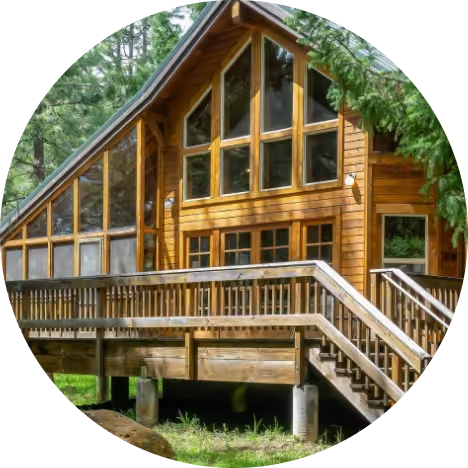
Confluence is a small licensed center in Oregon, two or three people. They put a guest's name in a form. That guest is then supported for three months, automatically, in a way that's calibrated to where they are in their experience. A team of that size couldn't build that. They don't have to.
The point isn't the platform. The point is partnership. There's a difference between handing someone a new tool to figure out and actually sharing the load with them. We're trying to do the second thing, with people who care about doing this work well and sustainably.
Get in touch
If you're running a retreat or practice, feeling the weight of it and stretched thin, that's worth paying attention to. Your guests deserve the full arc of care. And so do you. When that's actually in place, the oftentimes tedious business side of things becomes more seamless and flows better.
We'd love to have an honest conversation about what that could look like for you. No pitch deck, no pressure. Just an honest conversation about what's going on for you. Get in touch with us here.